Showing posts with label Megalodon. Show all posts

Wednesday, February 19, 2014

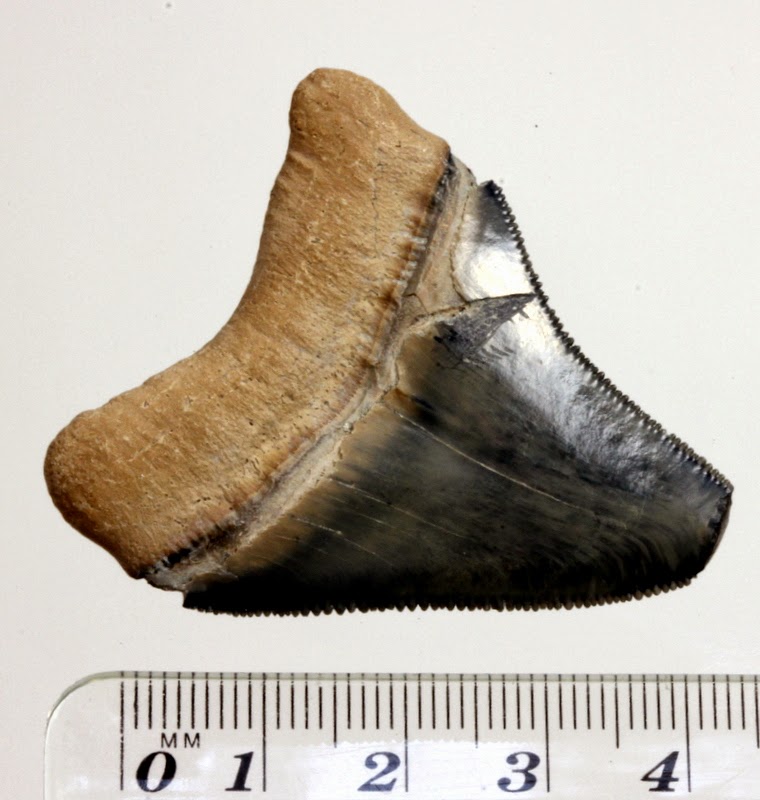
Megalodon attack – bite marks indicate Megalodon damaged its own teeth when biting on dislodged teeth.

Examining fossil Megalodon teeth shows common types of damage associated with predation.  

Many Megalodon teeth show evidence of bite marks, which are often attributed to a Megalodon biting its own lost tooth during a ‘feeding frenzy’, but cutting into a hard object which is not fixed or held in place is difficult to do.

The bite marks on the fossils in the photographs below suggest these teeth were fixed in the sharks mouth and the ‘V’ notch in the tooth was caused when it bit into one of its own dislodged teeth which was embedded in the prey animal.

As such, these teeth represent a classic example of predator/prey interaction.


Posted: 19 February 2014.

Megalodon attack – bite marks indicate Megalodon had close packed, parallel rows of biting teeth.

Examining fossil Megalodon teeth shows common types of damage associated with predation. The photographs below show parallel rows of bite marks left in dislodged Megalodon teeth during feeding.

Many Megalodon teeth show evidence of bite marks, which are often attributed to a Megalodon biting its own lost tooth during a ‘feeding frenzy’, but cutting into a hard object which is not fixed or held in place is difficult to do.

A more likely scenario is a tooth becomes dislodged during the course of an attack and embedded in the prey animal’s bone or flesh. When the Megalodon is subsequently feeding on the prey animal, it bites its own tooth, which is held in place by the bone or flesh of the prey animal.

The parallel bite marks left on fossil Megalodon teeth suggest Megalodon had close packed, parallel rows of biting teeth.

As such, these teeth represent a classic example of predator/prey interaction.


Posted: 19 February 2014.


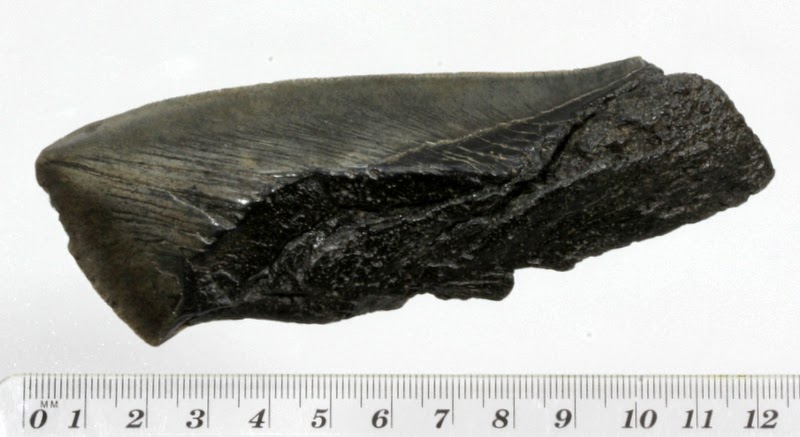
Megalodon attack – roots of teeth which have been bitten in half.

Examining fossil Megalodon teeth shows common types of damage associated with predation. The photographs below show the roots of a series of teeth which have been bitten in half during feeding.

Megalodon teeth which have been ‘sheared’ in half are often attributed to a Megalodon biting its own lost tooth during a ‘feeding frenzy’, but cutting into a hard object which is not fixed or held in place is difficult to do.

A more likely scenario is a tooth becomes dislodged during the course of an attack and embedded in the prey animal’s bone or flesh. When the Megalodon is subsequently feeding on the prey animal, it bites through its own tooth, which is held in place by the bone or flesh of the prey animal.

As such, these teeth represent a classic example of predator/prey interaction. 

Note: Some of these resemble ‘impact fractures’ to the tips of Megalodon teeth and in many cases it is difficult to distinguish the cause of the damage (See post “Megalodon attack – impact fractures to the tip of the tooth“ elsewhere in this Blog).


Posted: 19 February 2014.


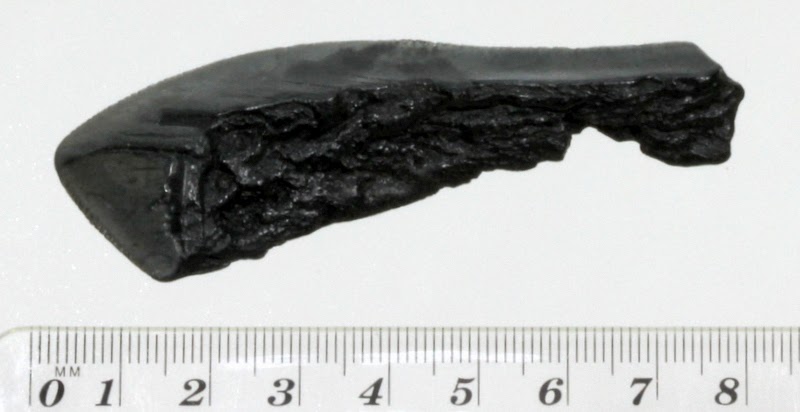
Megalodon attack – tops of teeth which have been bitten in half.

Examining fossil Megalodon teeth shows common types of damage associated with predation. The photographs below show the tops of a series of teeth which have been bitten in half during feeding.

Megalodon teeth which have been ‘sheared’ in half are often attributed to a Megalodon biting its own lost tooth during a ‘feeding frenzy’, but cutting into a hard object which is not fixed or held in place is difficult to do.

A more likely scenario is a tooth becomes dislodged during the course of an attack and embedded in the prey animal’s bone or flesh. When the Megalodon is subsequently feeding on the prey animal, it bites through its own tooth, which is held in place by the bone or flesh of the prey animal.

As such, these teeth represent a classic example of predator/prey interaction.


Posted: 19 February 2014.

Megalodon attack – bite mark serrations.

Examining fossil Megalodon teeth shows common types of damage associated with predation. The photographs below show the presence of serrations left from bite marks on the surface of the tooth.

Bite marks on the surface of Megalodon teeth are often attributed to a Megalodon biting its own lost tooth during a ‘feeding frenzy’, but cutting into a hard object which is not fixed or held in place is difficult to do.

A more likely scenario is a tooth becomes dislodged during the course of an attack and embedded in the prey animal’s bone or flesh. When the Megalodon is subsequently feeding on the prey animal, it bites into its own tooth, which is held in place by the bone or flesh of the prey animal. 

As such, these teeth represent a classic example of predator/prey interaction.

First example


Second example


Third example


Posted: 19 February 2014.